How plastic barriers, zipper doors and negative air machines keep dust, spores and soot where they belong.
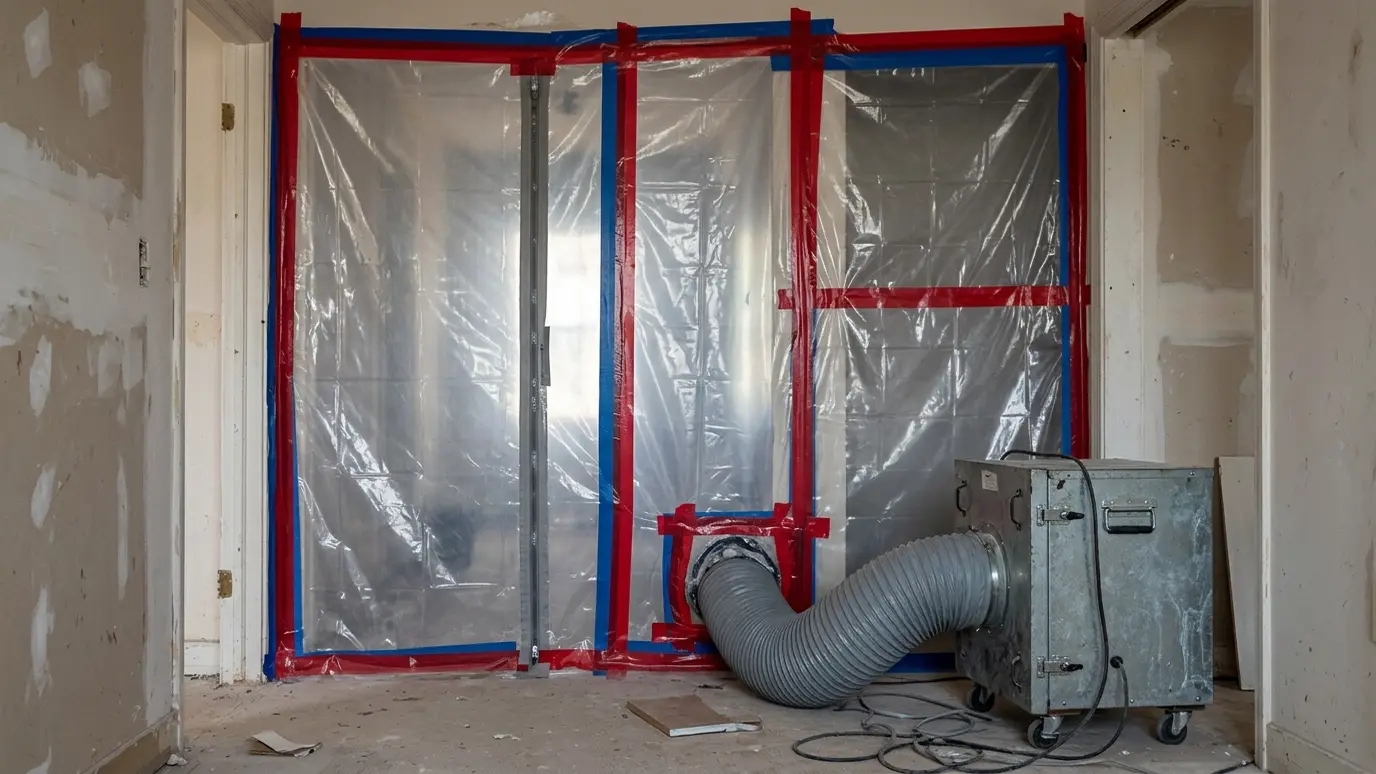
Containment is a sealed work area. Plastic sheeting, tape and zipper doors separate the work zone from clean living space. A negative air machine pulls air out of the zone through a HEPA filter, so any leakage goes in, not out.
It is used for mold, sewage, fire and demolition. A good containment looks simple but depends on tight seams, a controlled entry and steady airflow. Entry and exit procedures, such as a decontamination chamber, also keep contamination from spreading on clothing.
Sealed seams and edges.
Controlled entry.
Air flows in, not out.
Suits and boots managed.
Smoke or tissue tests.
Dismantled with HEPA vacuum.
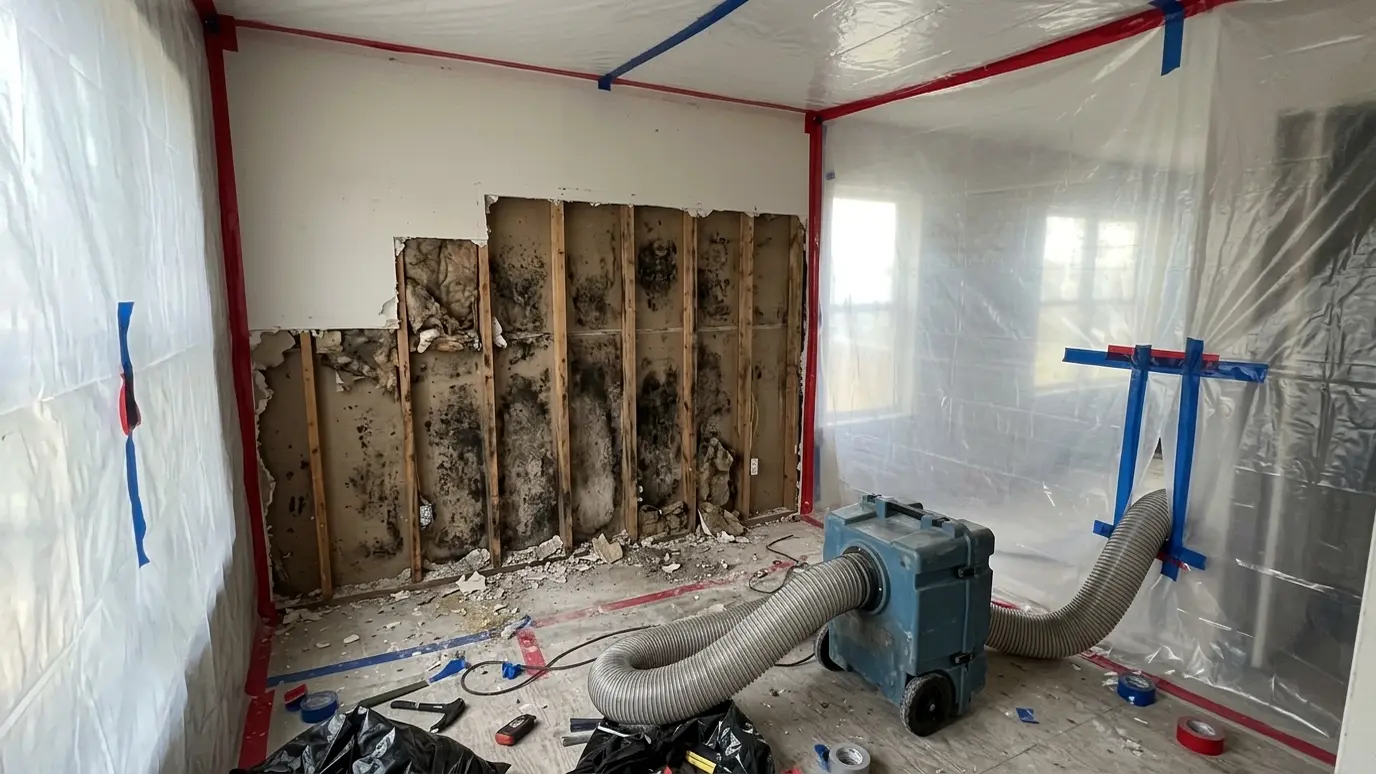
 Mold RemediationContainment, HEPA filtration, careful removal and drying, so mold is taken out of your home and not spread…Explore
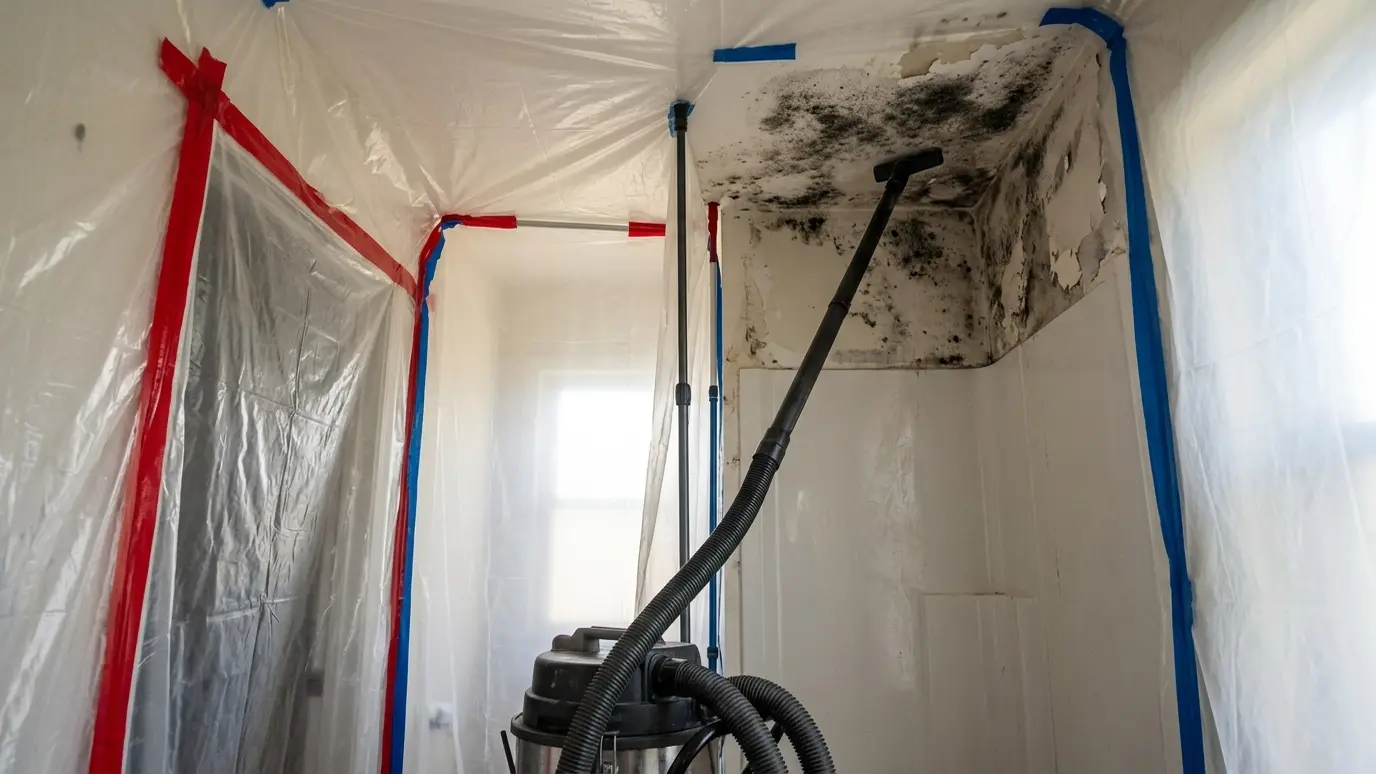
 Black Mold RemovalDark, heavy mold growth removed safely, with strict containment, HEPA filtration and the moisture problem fixed.Explore
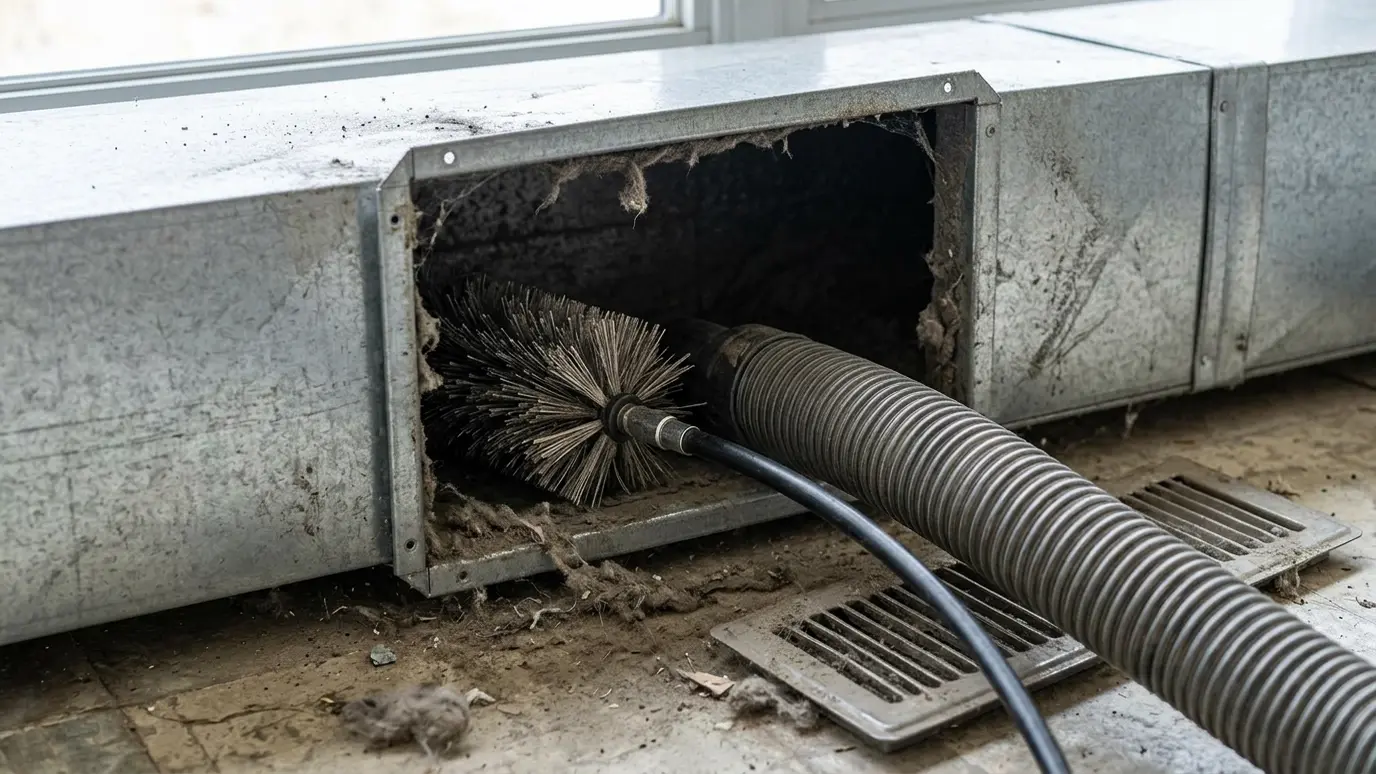 HVAC and Duct CleaningAir handlers, coils and ducts cleaned after mold, smoke or water damage so clean air is what actually…Explore
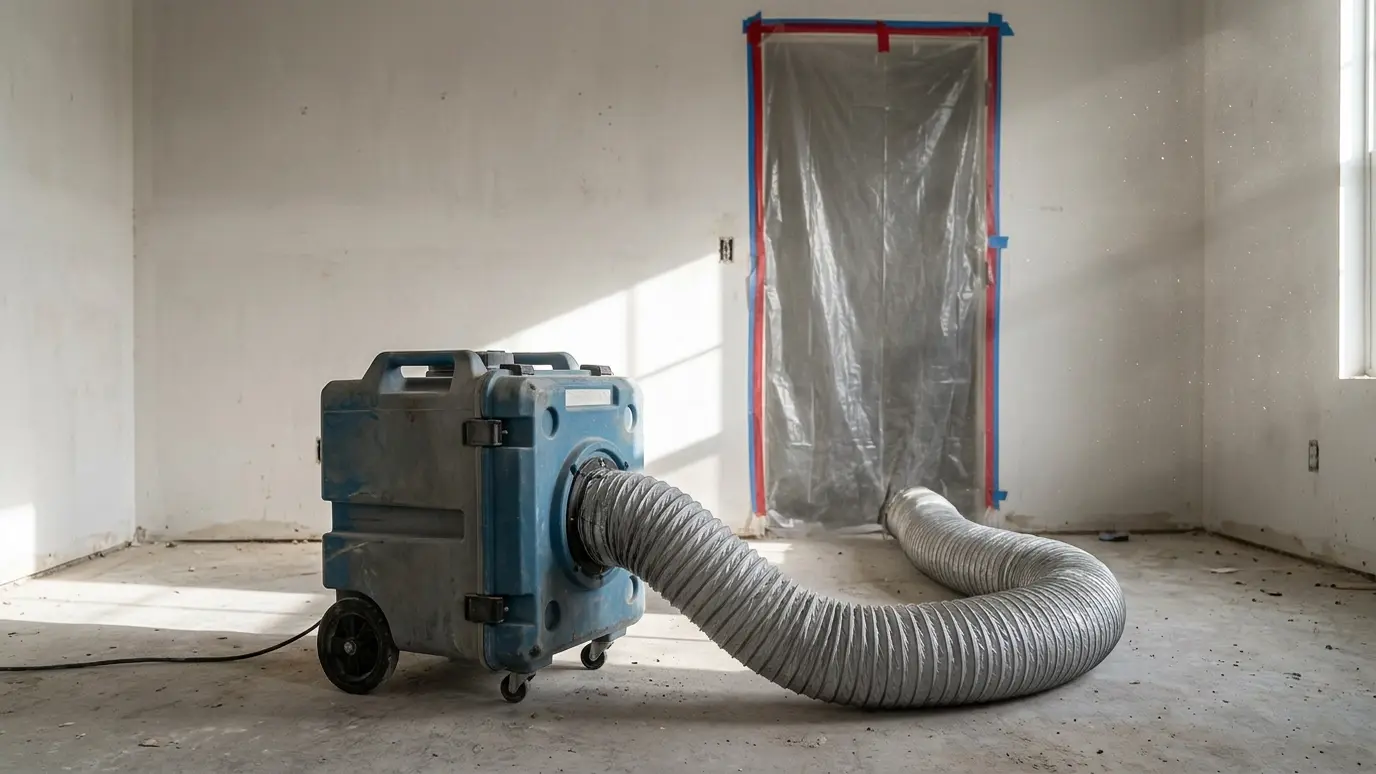 HEPA Air ScrubbingHEPA air scrubbers clean dust, soot and mold spores from the air during and after restoration work.Explore
Estimate drying, check mold risk or ballpark the cost.
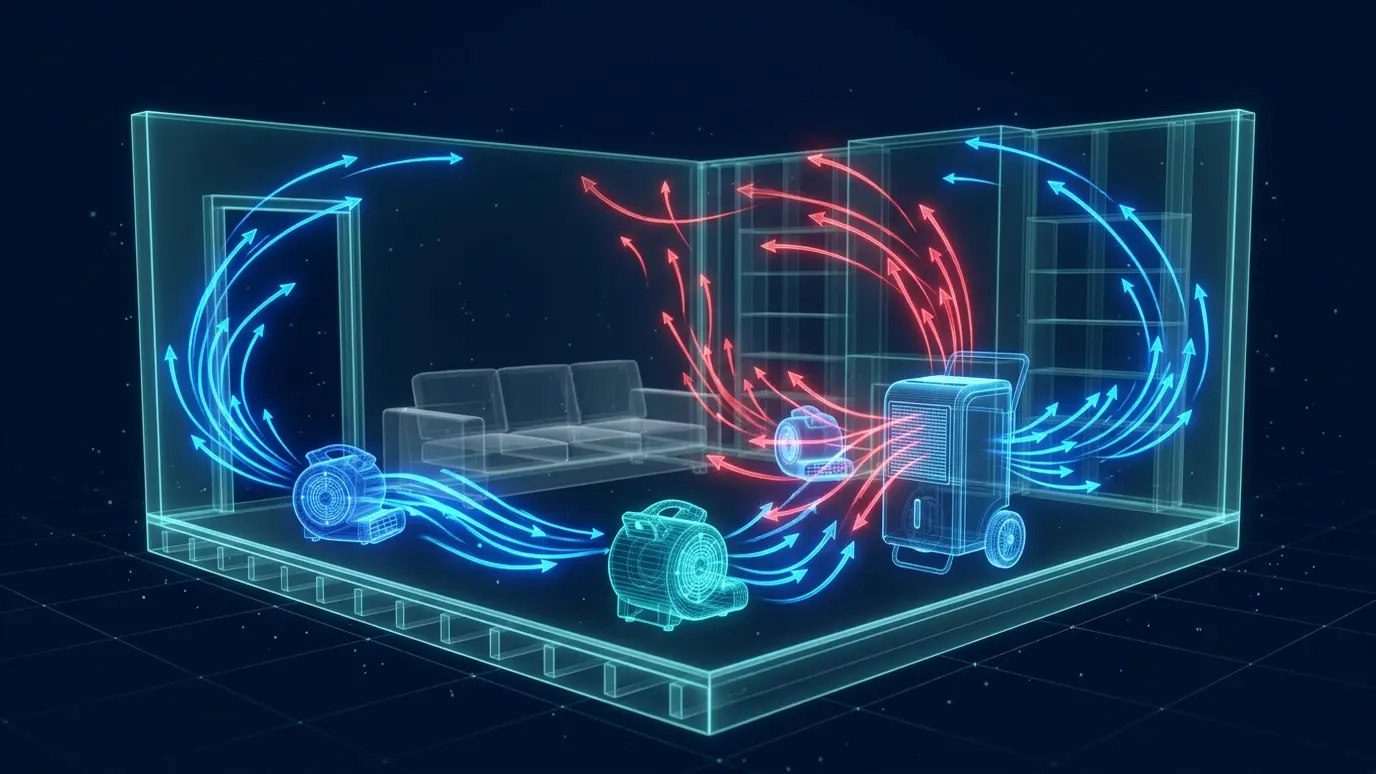 Drying Equipment and Time EstimatorEnter the room size and the wet area and see a planning count of air movers, dehumidifier capacity and typical drying days.Try it
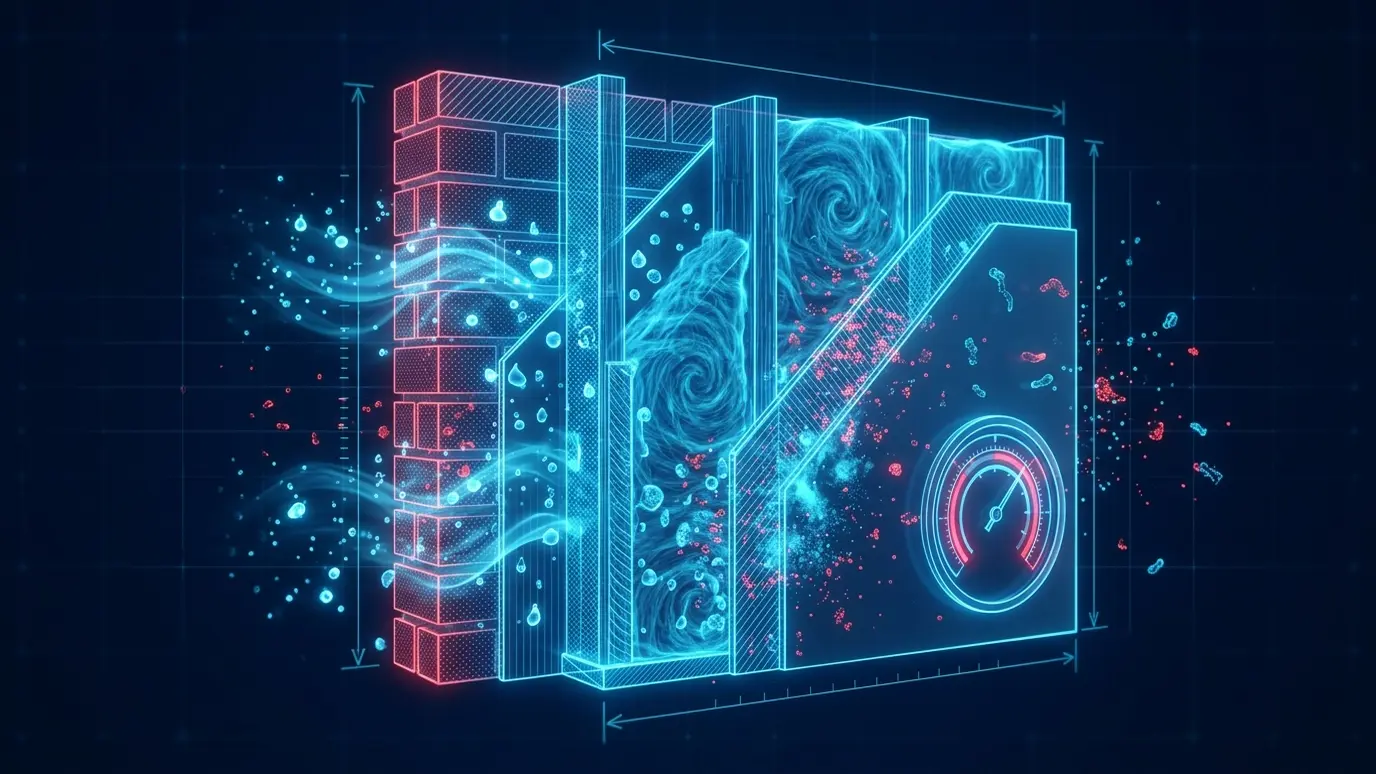 Mold Risk CheckerEnter how long materials have been wet, the humidity and the materials affected and see the mold risk and what to do next.Try it
 Restoration Cost EstimatorPick a project and a size and get a ballpark planning range.Try it
It prevents dust and spores from spreading to clean areas of the house.
The plastic is pulled slightly inward and airflow is checked at the seams.
Often yes, in unaffected areas. We advise by situation.
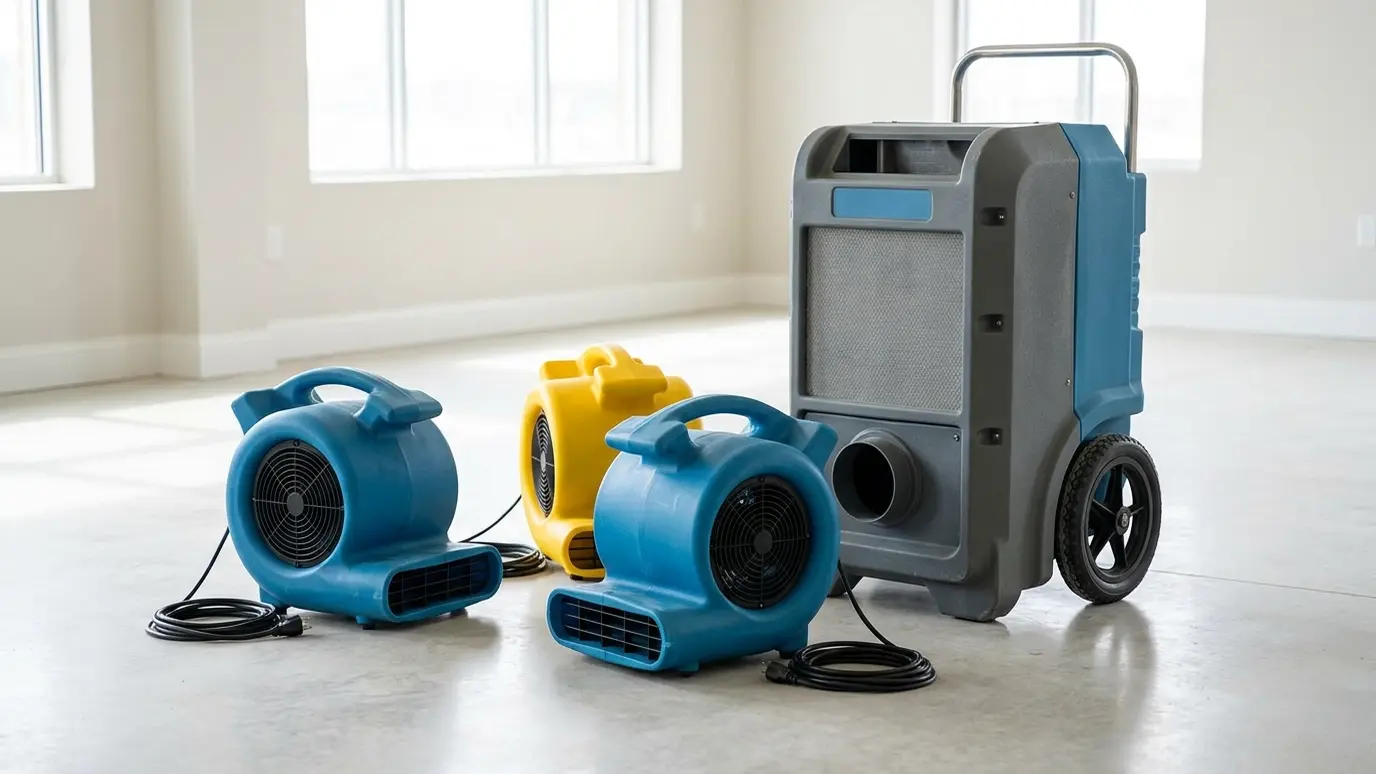 Material guideDrying EquipmentAir movers, dehumidifiers and drying mats explained: what each does, how they work together and why the right…Learn more
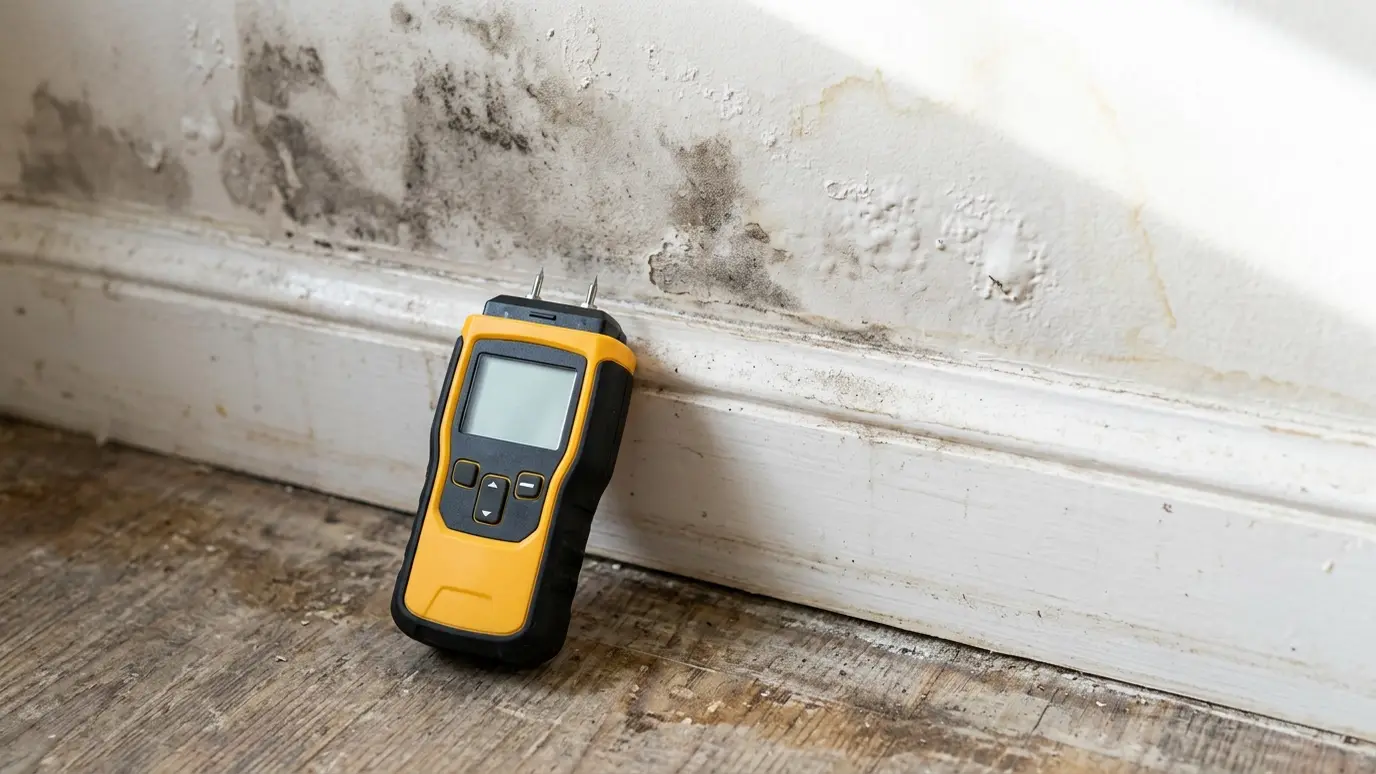 Material guideMoisture DetectionHow meters and thermal cameras find hidden water, what they can and cannot tell you and why they…Learn more
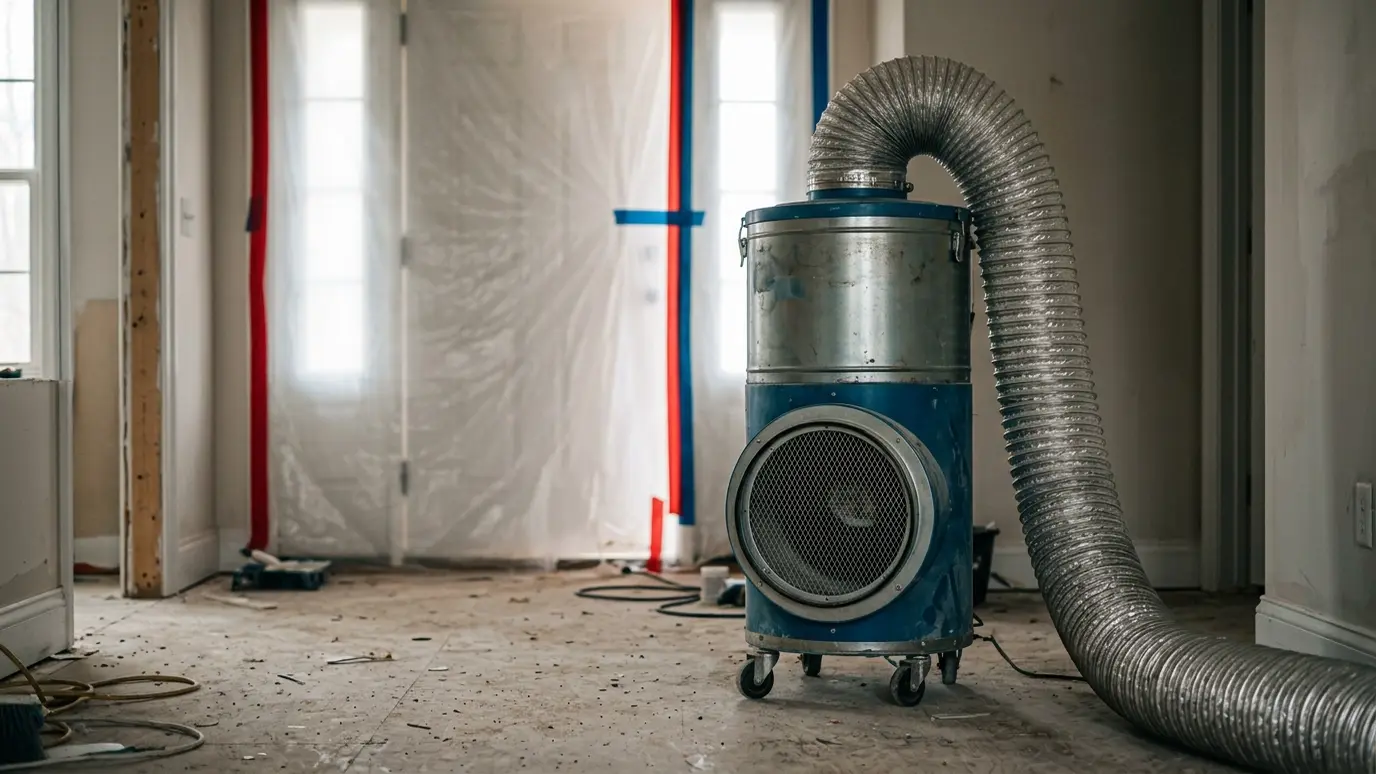 Material guideHEPA Air ScrubbersHow HEPA air scrubbers clean the air during and after restoration, and when they are the right tool.Learn more
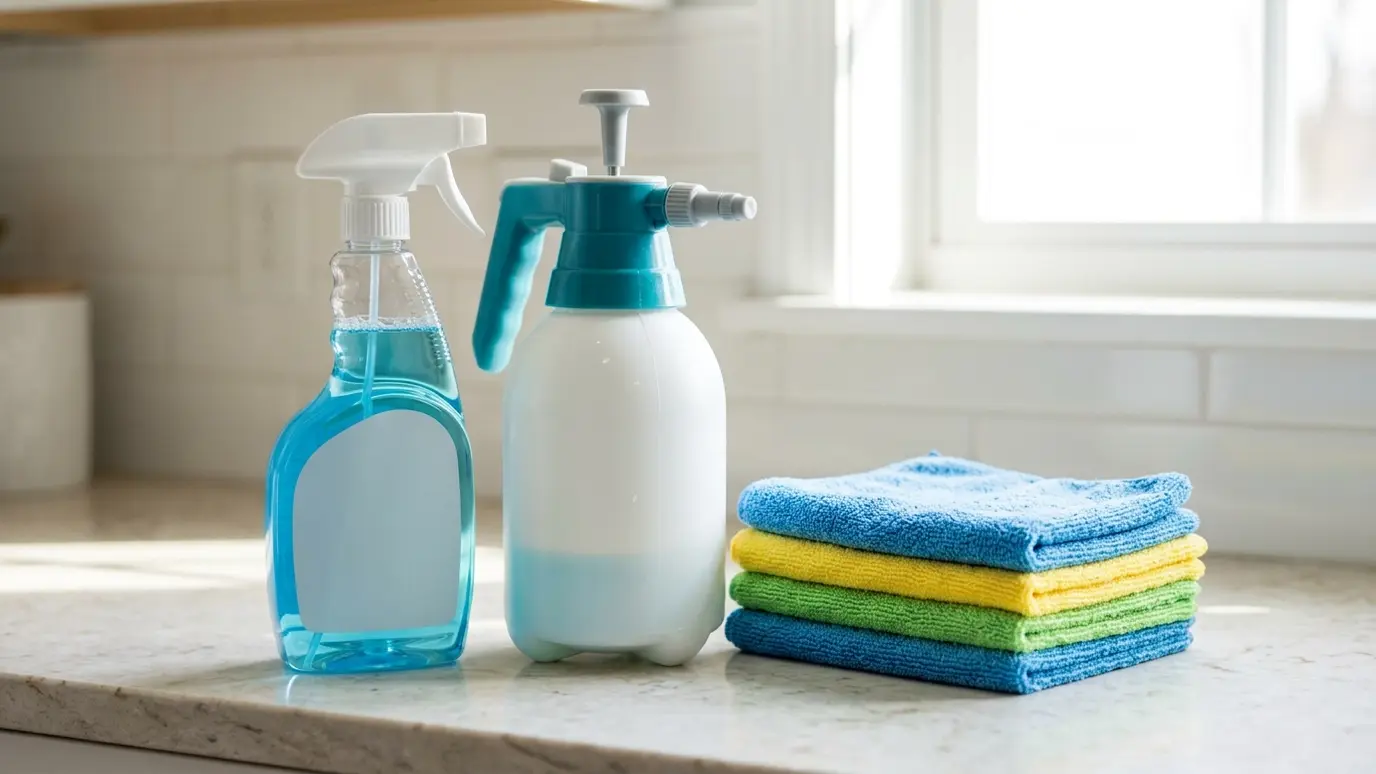 Material guideAntimicrobials and CleanersWhat antimicrobial treatments, degreasers and disinfectants do after a loss, and why cleaning comes before spraying.Learn more
Call us and we will tell you what is possible. We explain the plan, protect your property and document the work.