Professional removal of soot and smoke film from walls, ceilings, floors and belongings, using methods that lift soot instead of smearing it.
Soot is fine, sticky and acidic. It floats through a house on air currents and settles on rooms that were far from the fire, and it keeps damaging surfaces the longer it sits. The right cleaning method depends on what burned.
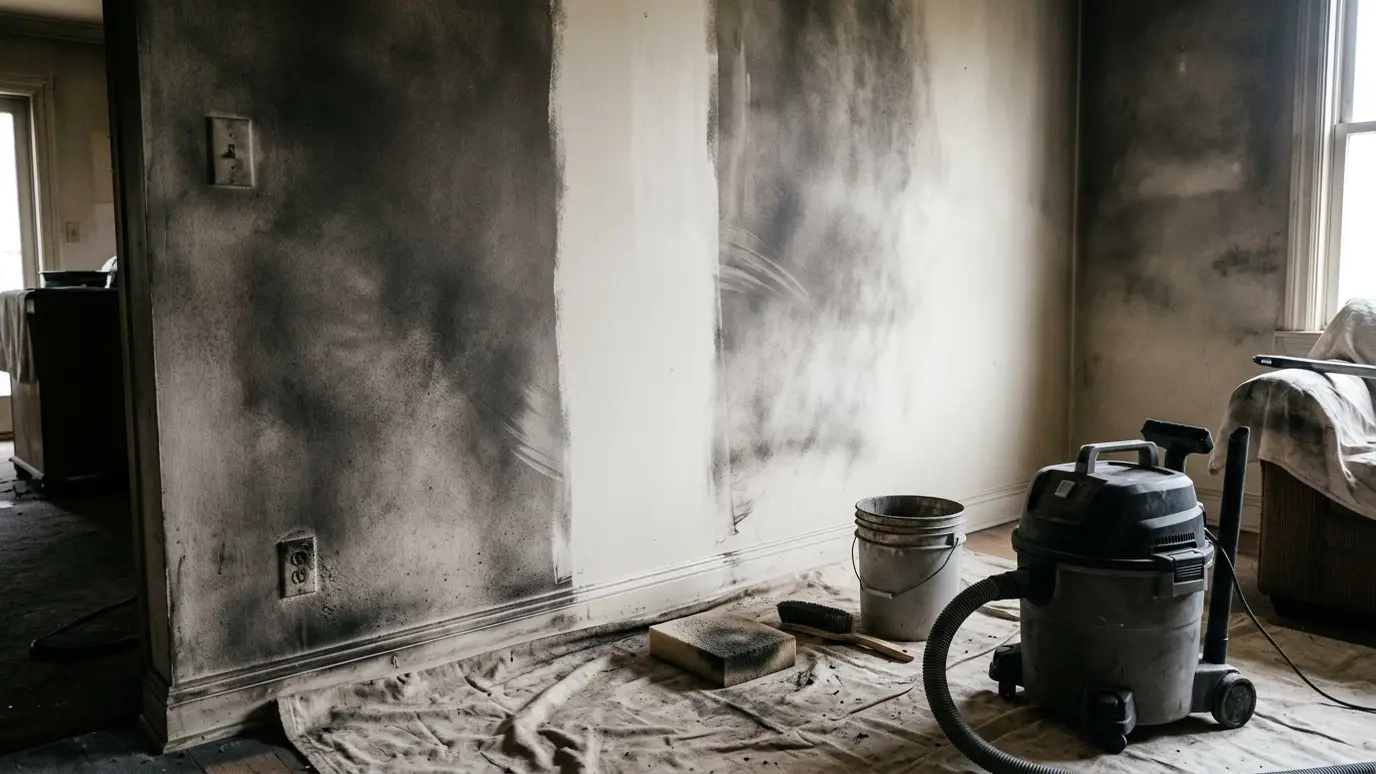
We begin with dry cleaning techniques such as HEPA vacuuming and chemical sponges that lift soot without pushing it in. We then wet-clean surfaces as needed, clean or replace filters and check the HVAC system. Surfaces that cannot be cleaned are replaced, and we tell you which are which.
Burned wood and paper leave dry powdery soot. Plastics and rubber leave smears. Kitchen fires leave a thin residue that is nearly invisible but smells strongly. Each needs a different product and technique.
Wiping soot with a wet cloth pushes it into porous surfaces and can turn a cleanable stain into a permanent one. If you must touch things, use dry gloves and avoid rubbing.
Soot travels through ducts. If the system ran during or after the fire, it likely spread soot through the house. We inspect and clean ducts and replace filters.
Cleaning ceilings first, walls next and floors last keeps soot from falling onto cleaned surfaces. It sounds simple, but order matters a lot.
Drag the handle to compare.
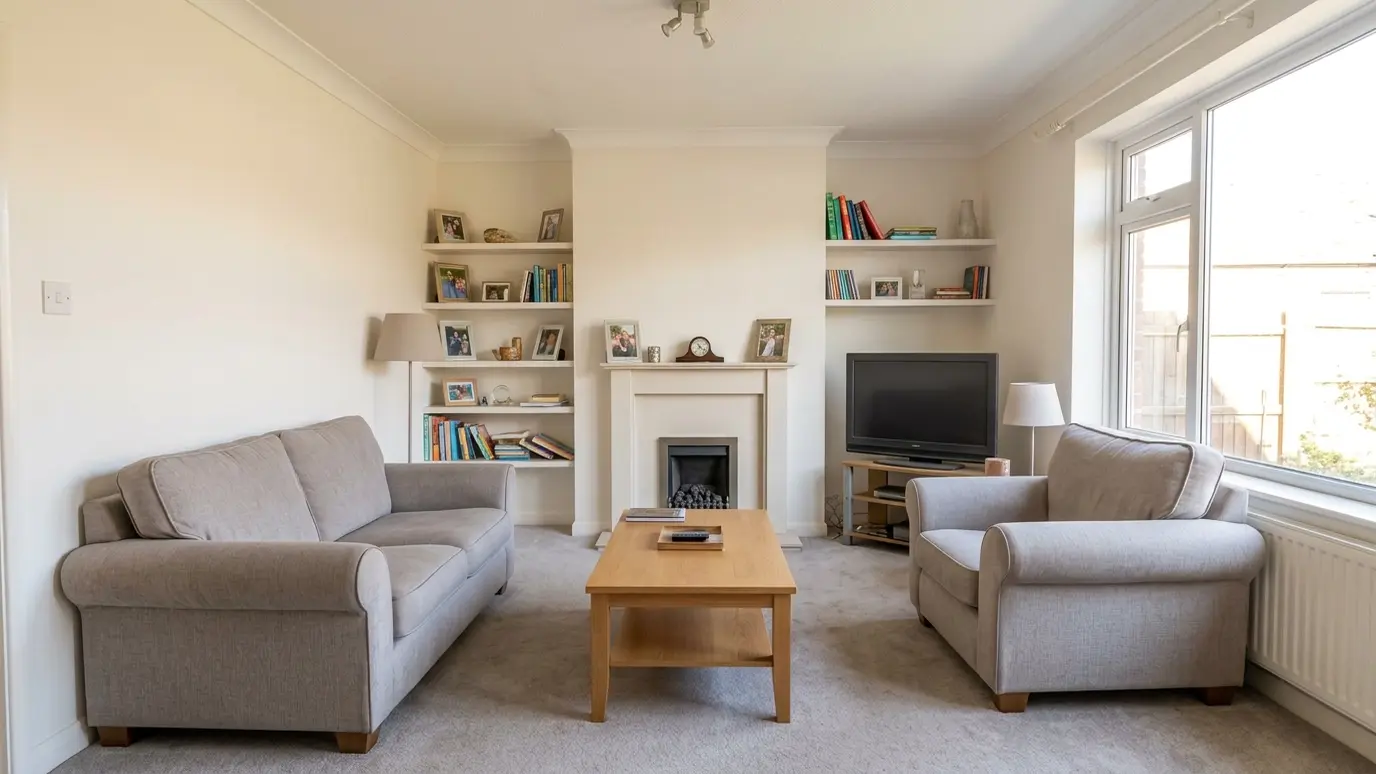
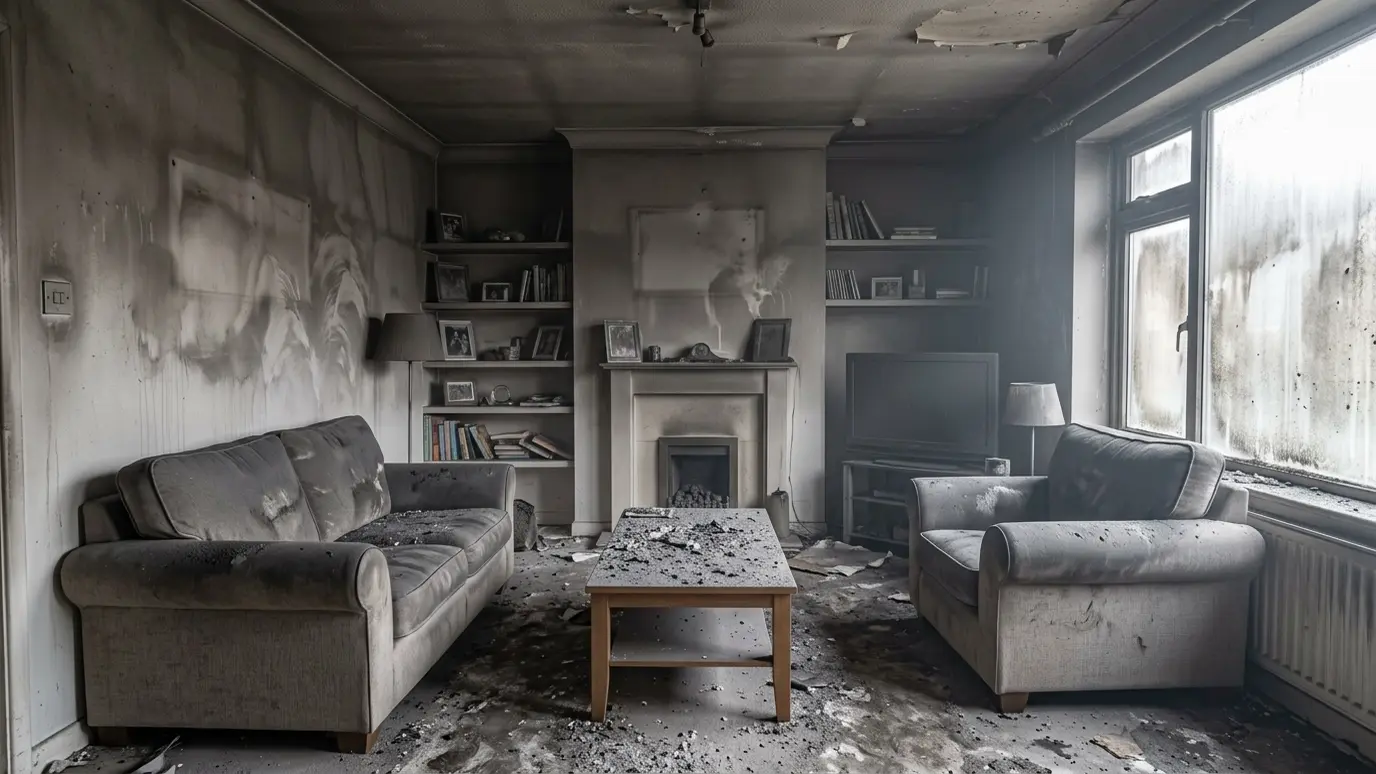 BeforeAfter
Dry, wet or protein soot treated correctly.
Walls, ceilings, floors and fixtures.
Ducts and filters cleaned or replaced.
Even invisible film located.
HEPA air scrubbing during cleaning.
What cleans and what replaces.
Every topic has its own page with what to expect and how we approach it.
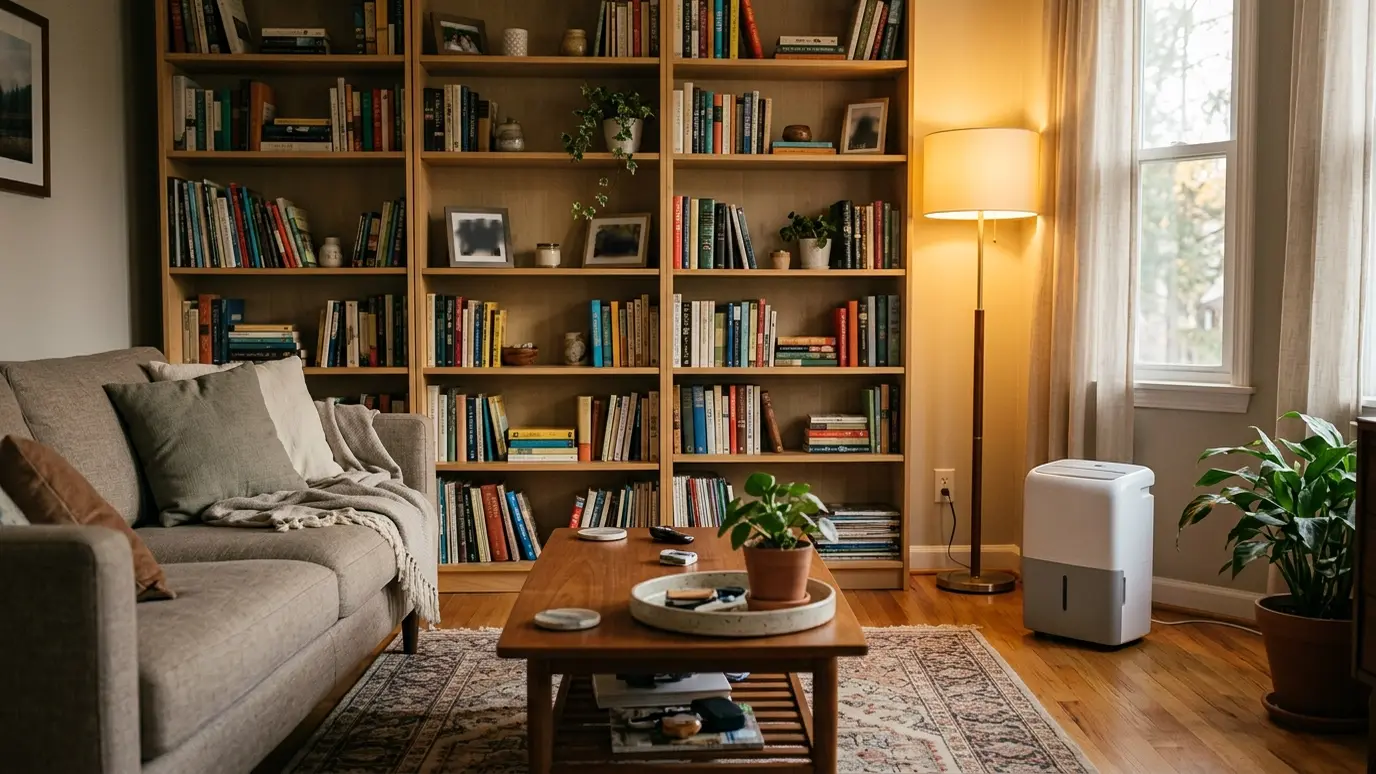 SituationHomeownersWhat homeowners should expect during a restoration project, from first call to final walk-through, and how to stay…Learn more
 SituationInsurance and ClaimsA plain-English guide to documenting a loss, talking with your insurance company and keeping a claim organized.Learn more
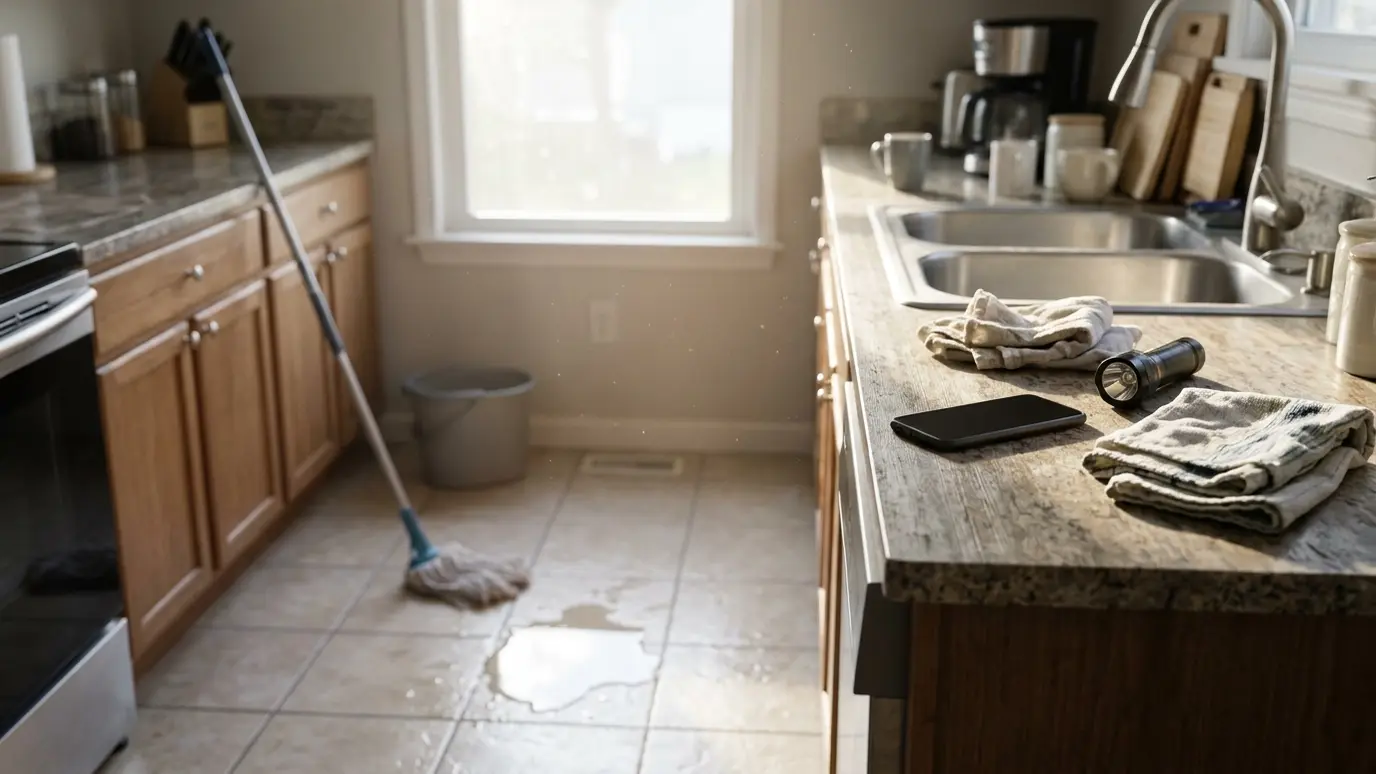 SituationThe First HoursThe first hours after water, fire or storm damage decide how big the problem gets. Here is what…Learn more
Pick the type of loss and get a printable checklist of what to do and what to avoid right now.
Tell us what happened and send photos if you can. We guide you on safety and plan the visit.
We find the source, map the damage with meters and thermal imaging and explain the plan.
Water extraction, board-up, tarping and removal of materials that cannot be saved.
Air movers, dehumidifiers and careful cleaning, with containment for fire and mold work.
Moisture readings and equipment adjustments until the structure is dry.
Repairs, paint and a final walk-through, with records you can keep.
Odor lives in porous materials and ducts. If the source residue stays, the smell returns when humidity rises. Real removal means cleaning the surfaces, treating the air and addressing the HVAC.
Often that makes it worse. Dry cleaning first and the right product matter. We recommend waiting for a professional assessment.
Often yes, after cleaning. Sealing primer is used over stains and odor so smoke smell does not bleed through.
It can irritate lungs and skin. Wear gloves and a mask if you must enter, and keep children and pets away.
Soot falls and spreads. Starting at the top means you do not clean the same surface twice.
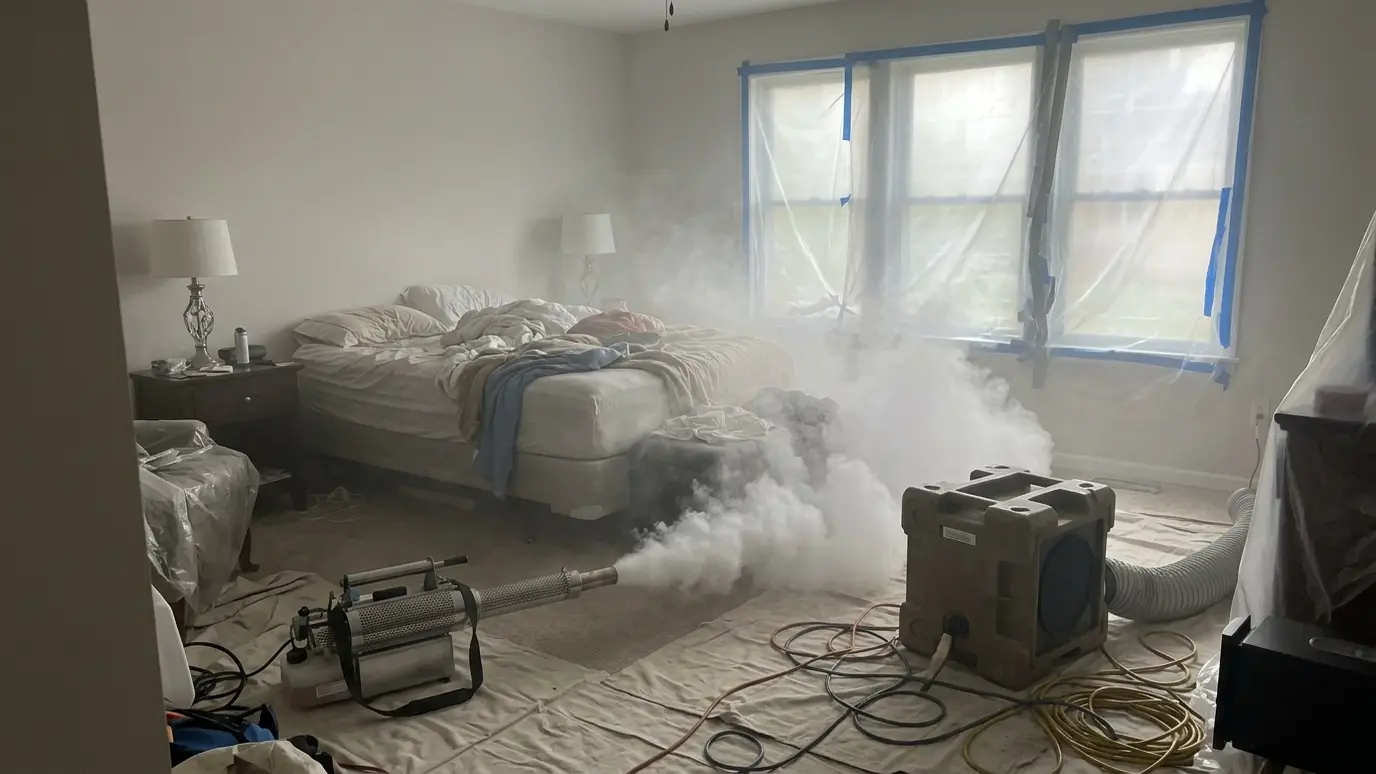 Smoke Odor RemovalSmoke smell removed at the source with cleaning, air scrubbing and thermal fogging or hydroxyl treatment where appropriate.Explore
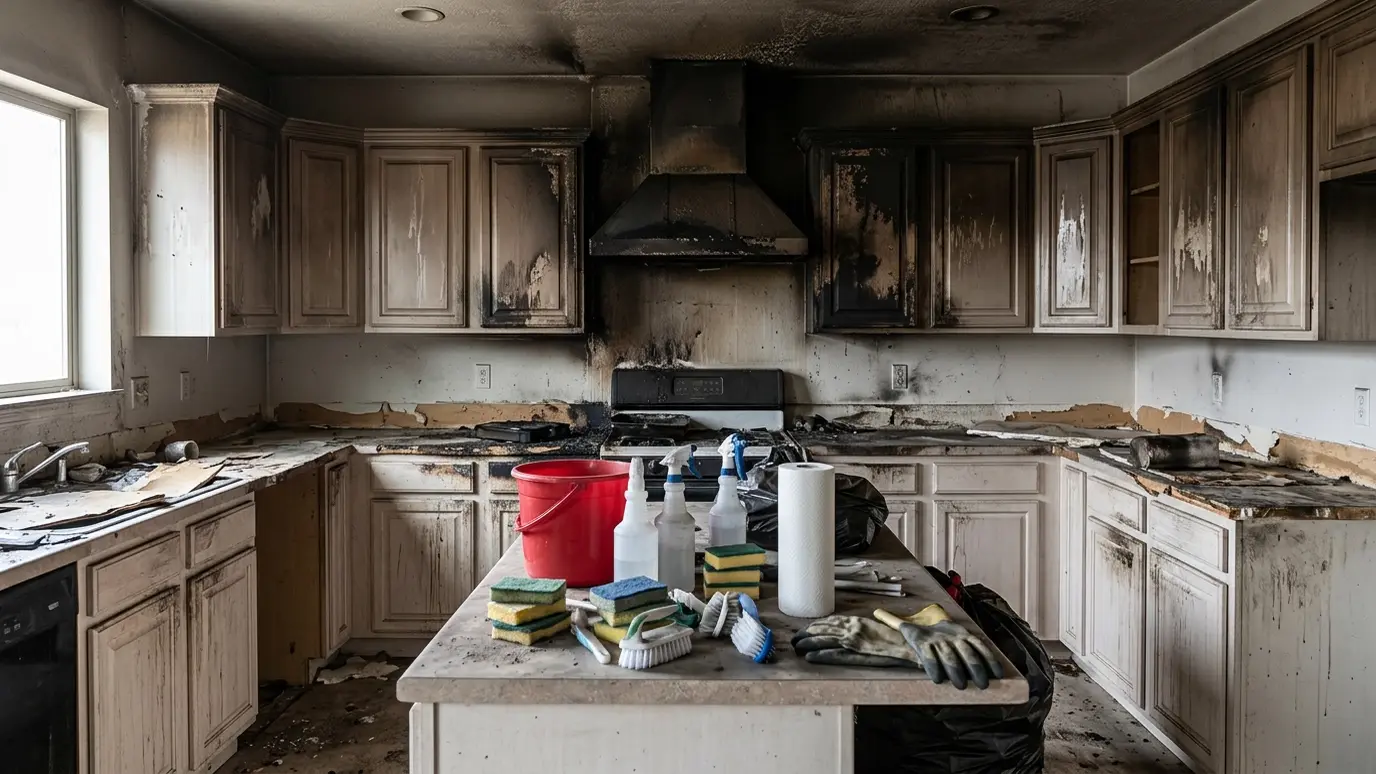 Kitchen Fire CleanupGrease fires and stove fires leave sticky protein soot and strong odor. We clean cabinets, appliances and air…Explore
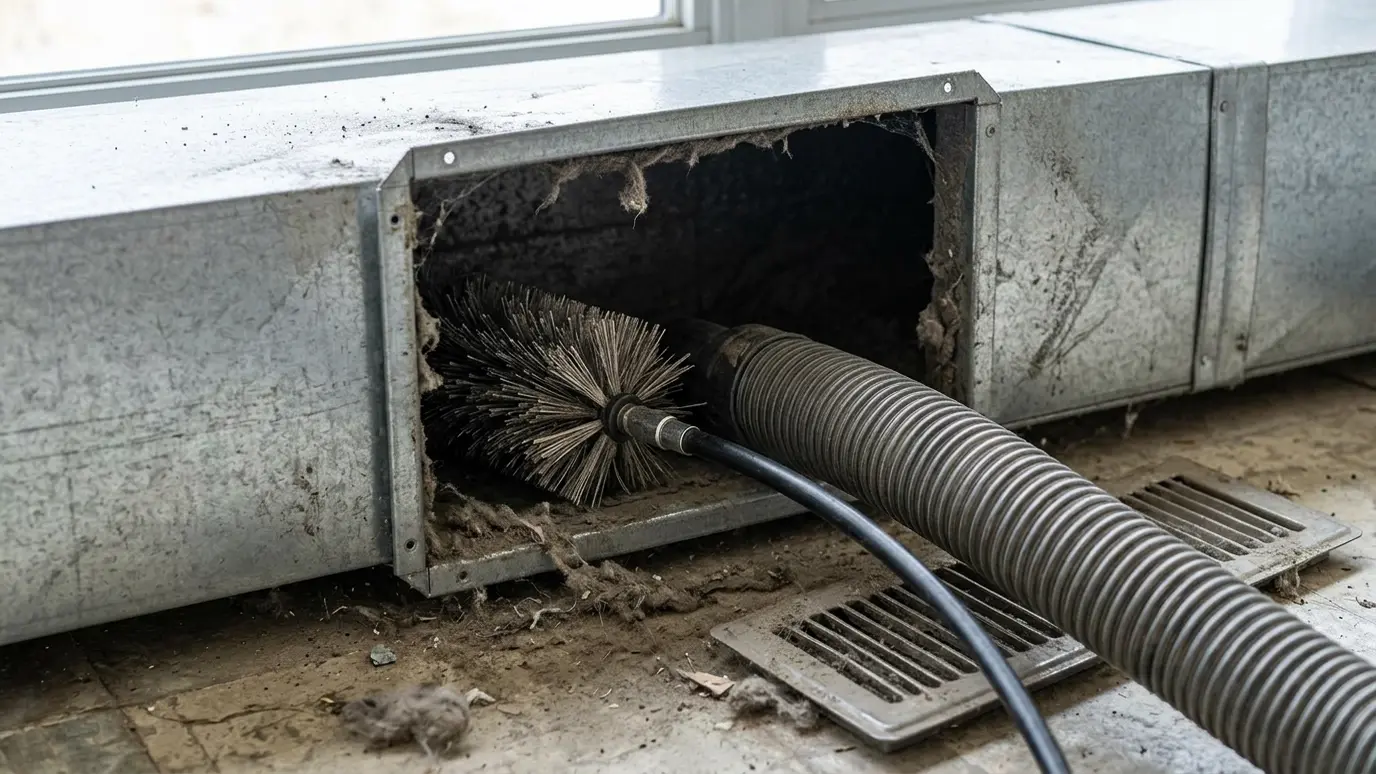 HVAC and Duct CleaningAir handlers, coils and ducts cleaned after mold, smoke or water damage so clean air is what actually…Explore
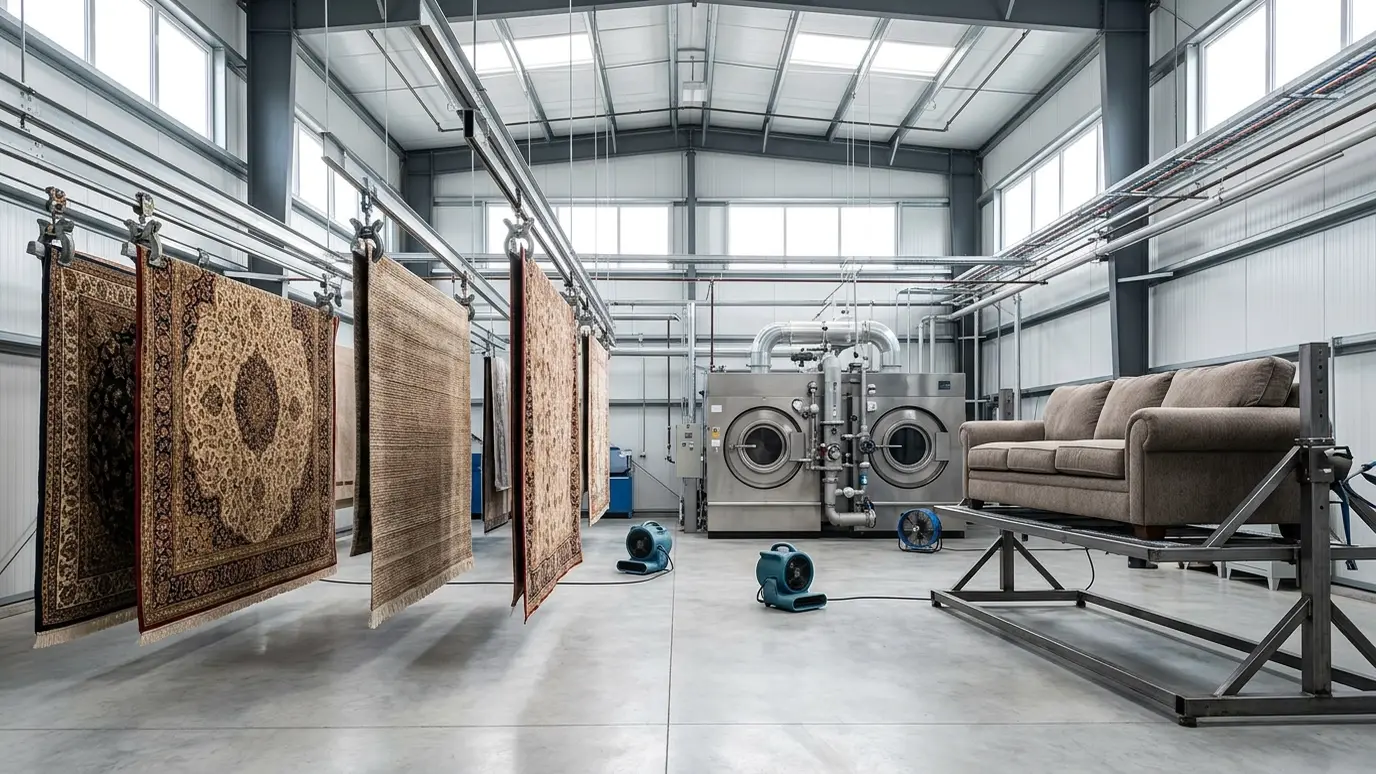 Furniture and TextilesSofas, mattresses, rugs, drapes and clothing cleaned after smoke, soot or water, with honest advice on what to…Explore
Tell us about the job and we will call you back quickly.
Or call (615) 357-7797 to talk now.