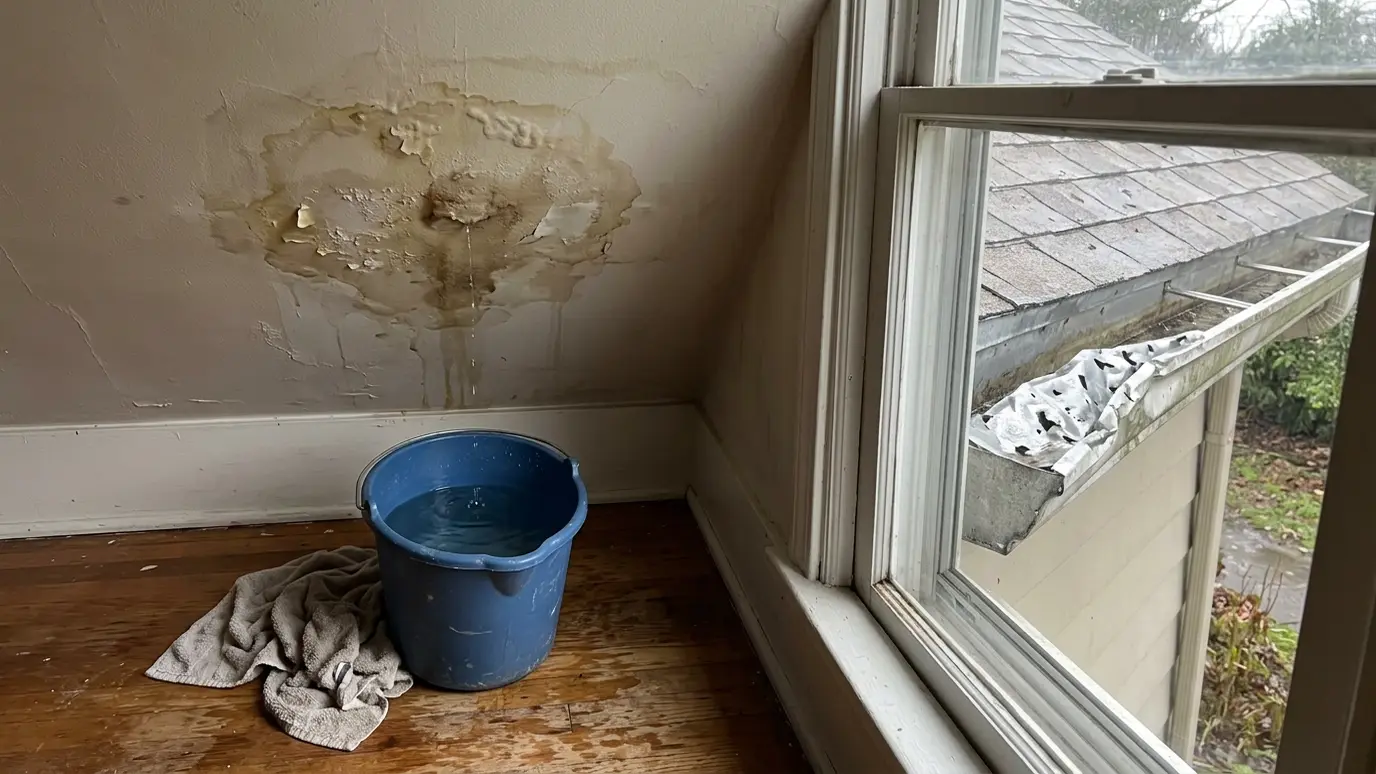
Interior water damage from roof leaks and hail, dried and repaired, with temporary protection in place until the roof is fixed.
Hail dents roofs and cracks shingles. Wind lifts flashing. Over weeks, water finds its way in and shows up as a stain on a ceiling, a damp attic or a musty smell. By the time the stain appears, the insulation above may be soaked.
We find the water path, dry the attic and ceilings, remove wet insulation and protect the roof with a temporary tarp if needed. A roofer makes the permanent repair, and we coordinate our work around it so the repairs are done in the right order.
Roof leaks rarely drip where the hole is. Water runs along rafters before it shows up. We trace it with moisture readings and thermal imaging.
A tarp keeps rain out until the roof is repaired. It is temporary, but it prevents a second, larger loss.
Wet insulation holds water against drywall and wood. It usually has to come out for the area to dry and to prevent mold.
A roofer can look for bruised shingles, cracked flashing and gutter dents after a hailstorm. Finding damage early protects the roof and your claim.
Drag the handle to compare.
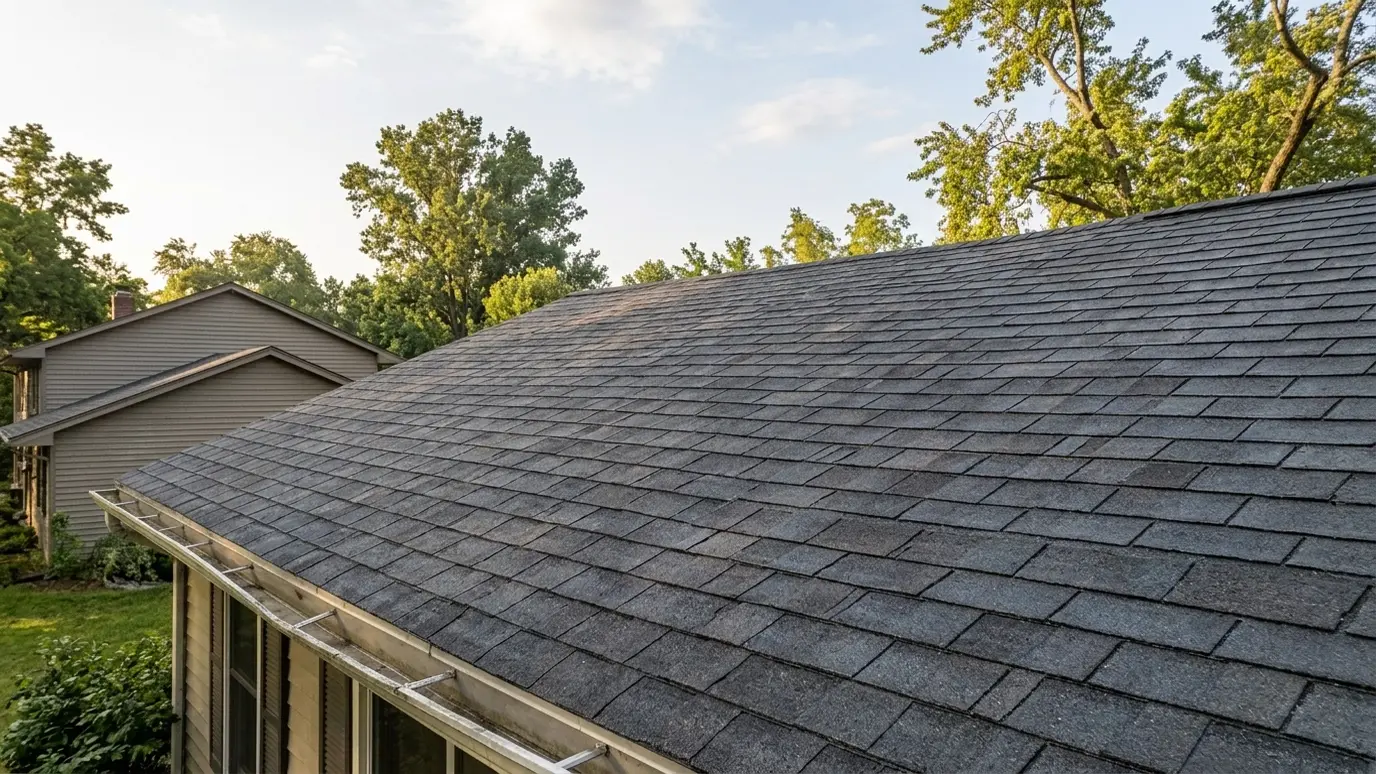
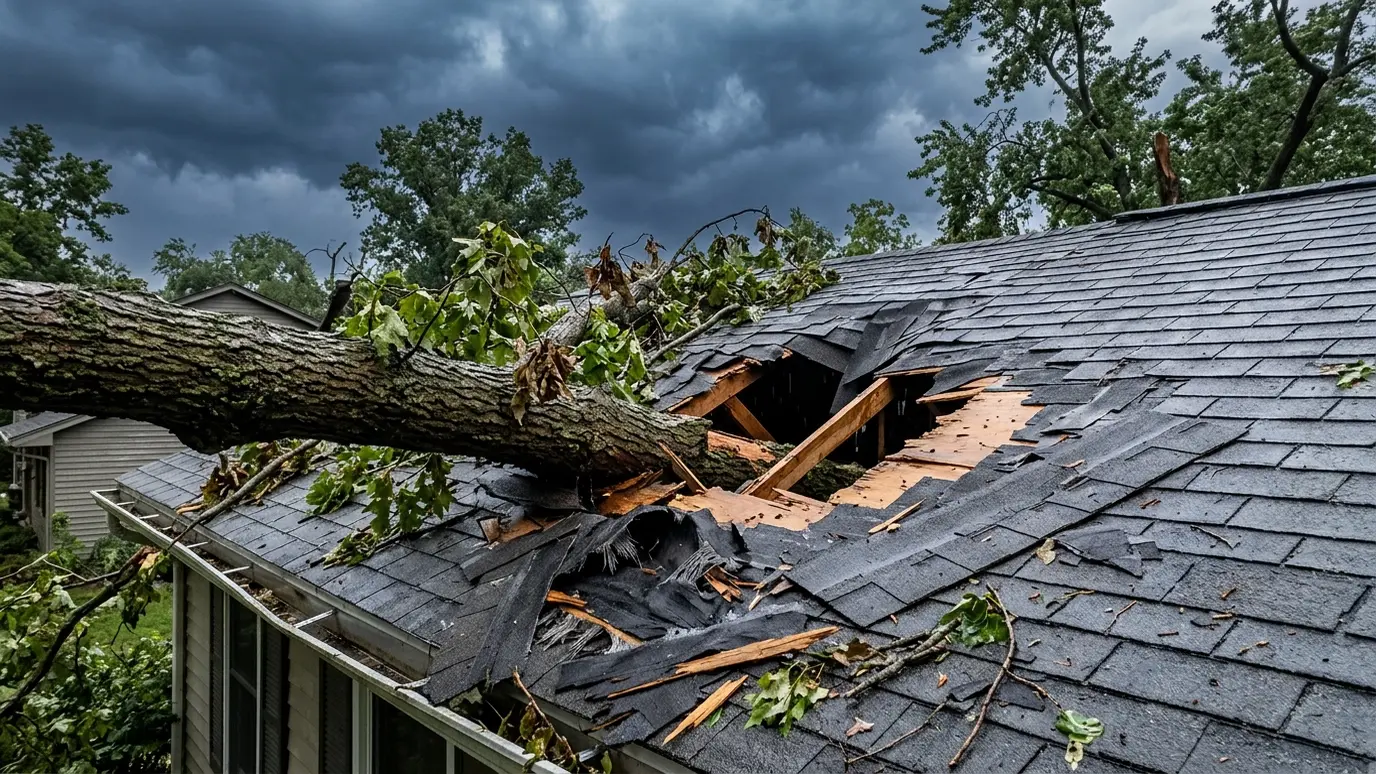 BeforeAfter
Moisture mapped from roof to ceiling.
Temporary protection in place.
Wet insulation removed and the space dried.
Drywall patched and painted.
Work sequenced with the roof repair.
Photos for your claim.
Every topic has its own page with what to expect and how we approach it.
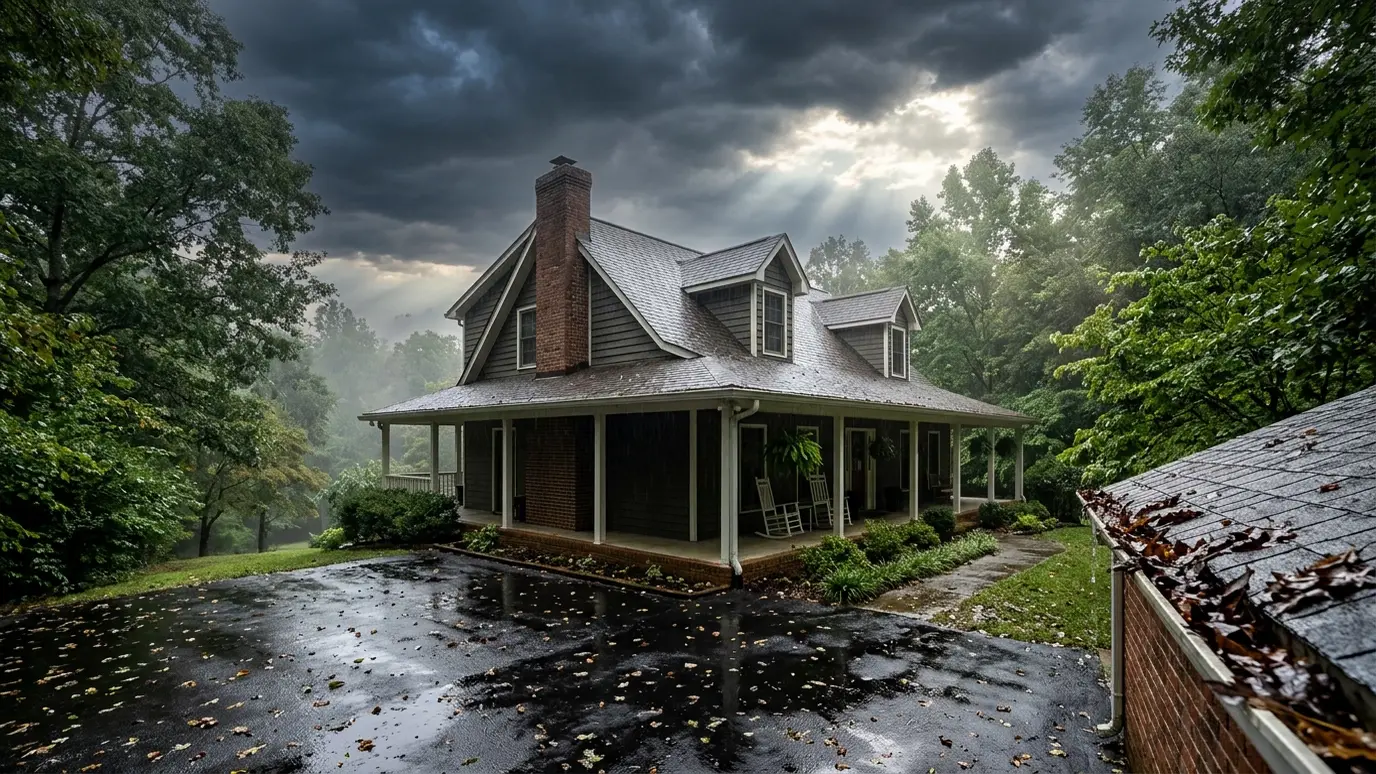 SituationStorm SeasonSpring storms, tornadoes, hail and heavy rain are part of life here. A little preparation reduces damage and…Learn more
 SituationHomeownersWhat homeowners should expect during a restoration project, from first call to final walk-through, and how to stay…Learn more
 SituationInsurance and ClaimsA plain-English guide to documenting a loss, talking with your insurance company and keeping a claim organized.Learn more
Enter a reference reading from a dry area and a reading from the affected area and see whether the material is close to dry.
Tell us what happened and send photos if you can. We guide you on safety and plan the visit.
We find the source, map the damage with meters and thermal imaging and explain the plan.
Water extraction, board-up, tarping and removal of materials that cannot be saved.
Air movers, dehumidifiers and careful cleaning, with containment for fire and mold work.
Moisture readings and equipment adjustments until the structure is dry.
Repairs, paint and a final walk-through, with records you can keep.
Not always right away. Hail can bruise shingles and shorten roof life, and leaks may show up later. A roof inspection after a hailstorm is worthwhile.
Look for stains on ceilings, damp insulation, musty smells and peeling paint. We can also measure moisture.
We handle the interior and the temporary protection, and we coordinate with a roofer for the permanent repair.
Coverage depends on your policy. We document the damage so you can discuss it with your insurance company.
As soon as safely possible. Deadlines for claims can apply.
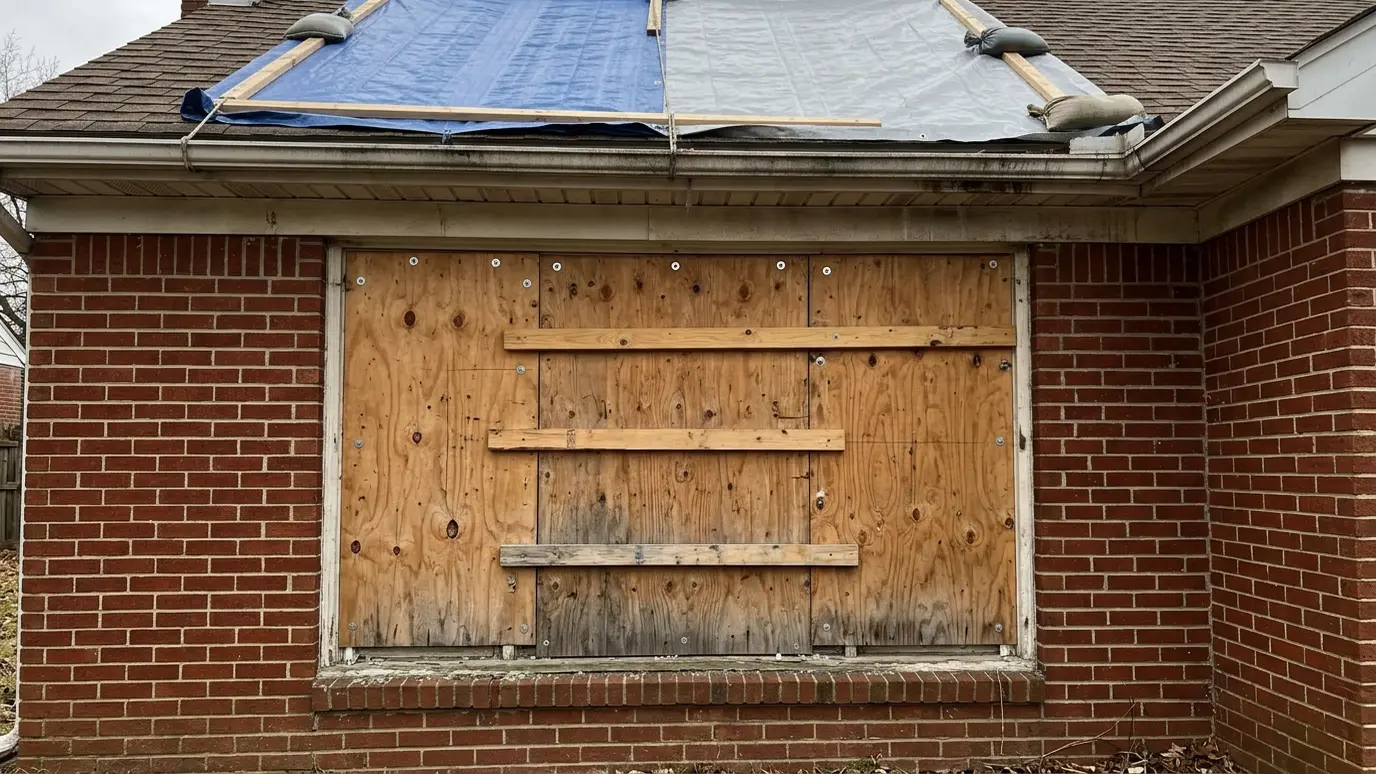 Board-Up and Roof TarpingBroken windows, doors and roofs covered quickly with plywood and heavy tarps to stop rain, wind and trespassers.Explore
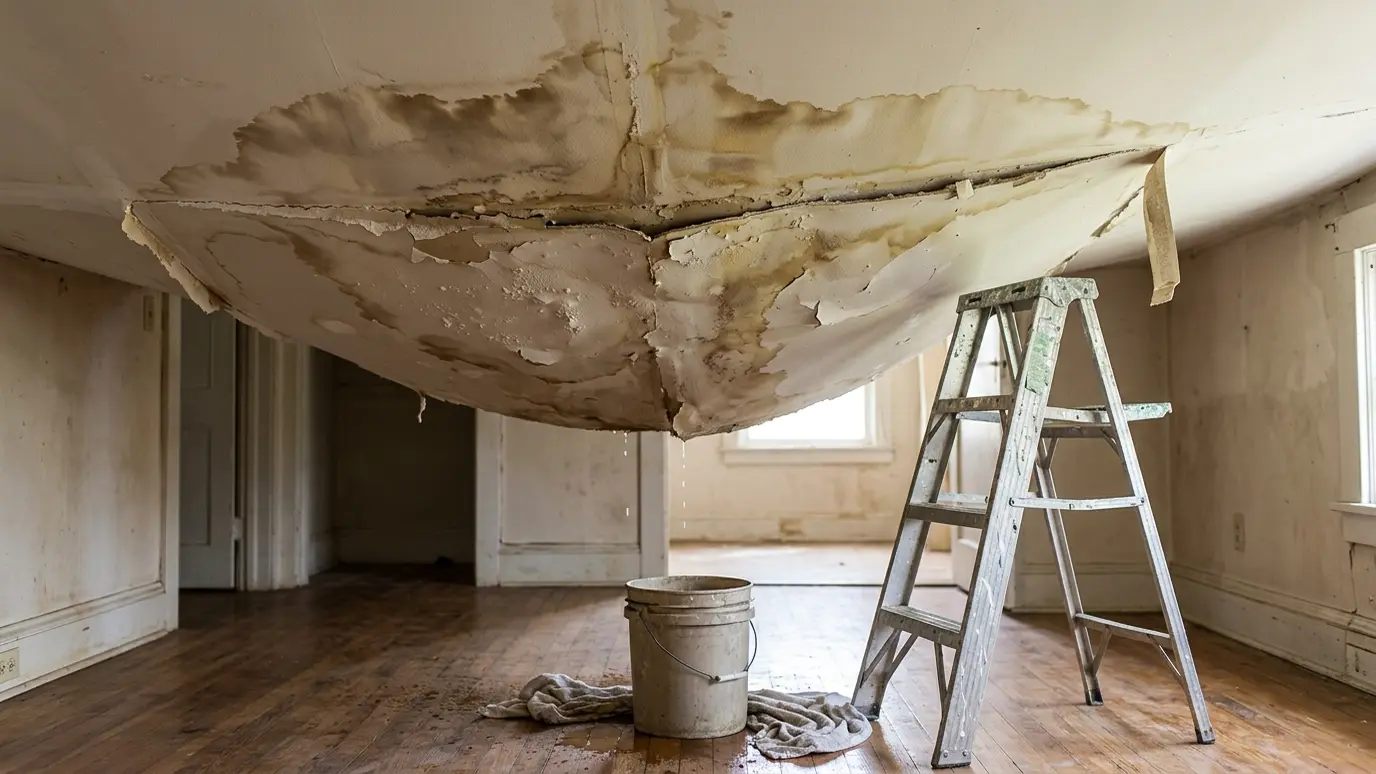 Ceiling and Wall DamageStained, sagging or wet ceilings and walls dried, opened where needed and repaired, with the source found first.Explore
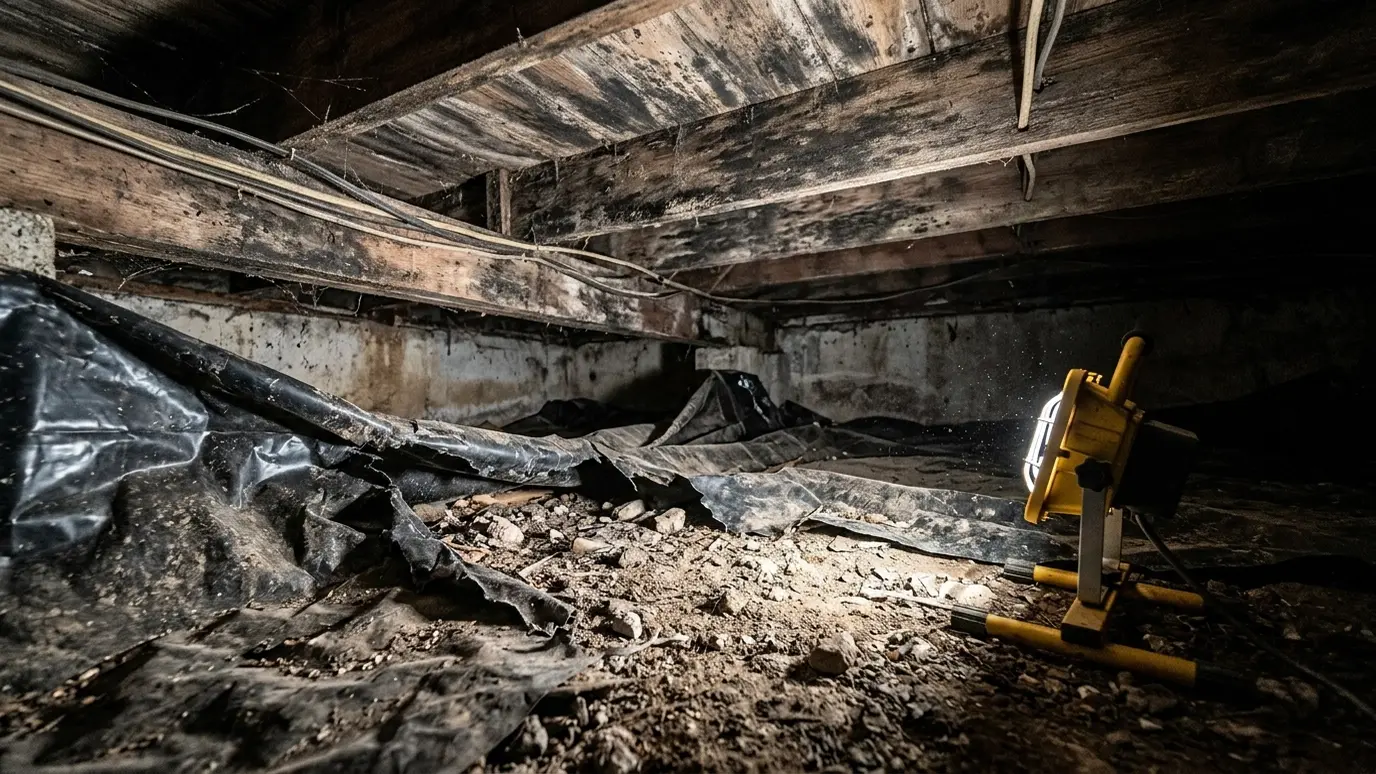 Attic and Crawl Space MoldMold on roof sheathing, joists and subfloors removed, with moisture and ventilation problems fixed so it stays gone.Explore
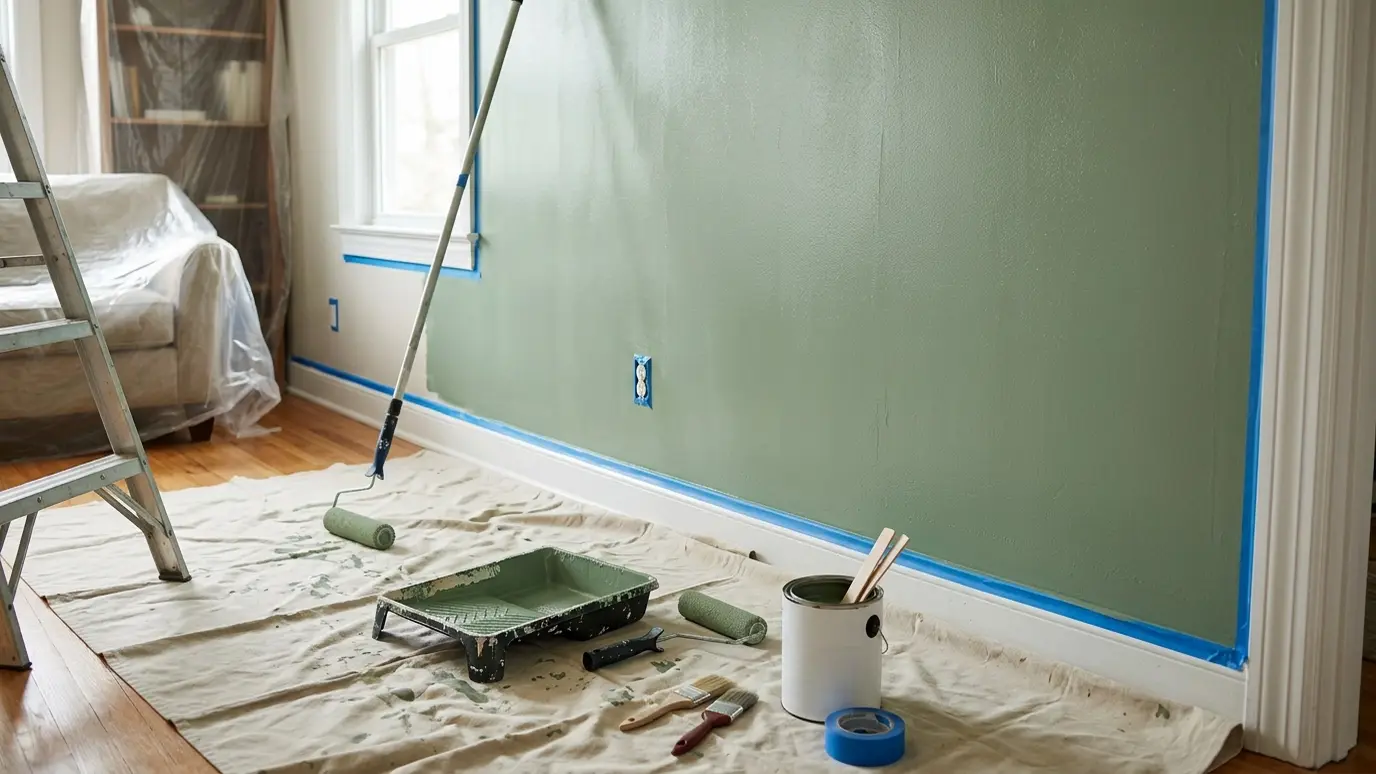 Painting and Finish WorkStain-blocking primer, patching, painting and trim work that make repaired areas disappear into the rest of the room.Explore
Tell us about the job and we will call you back quickly.
Or call (615) 357-7797 to talk now.